
Power Distribution Designed for Outdoor Amenities
Residential Electrical & Lighting Services in La Mesa for properties adding outdoor kitchens, entertainment areas, or accessory structures
Outdoor living projects require dedicated electrical infrastructure that supports appliances, lighting systems, and entertainment equipment without overloading existing circuits. Trueskil coordinates electrical installations for landscape lighting, outdoor kitchen power, ADU service, and entertainment area wiring across residential properties in La Mesa. Code-compliant work ensures safety and proper load distribution, with panel upgrades and circuit additions planned to accommodate current and future power demands.
Electrical installation involves conduit routing underground or through exterior walls, panel capacity evaluation to determine whether upgrades are necessary, and fixture placement that integrates with hardscape and landscape designs. Outdoor lighting systems include pathway illumination, accent lighting for architectural features, and ambient lighting for seating areas. Dedicated circuits supply power to outdoor kitchens, water features, and heating elements, isolating high-draw equipment from interior household circuits to prevent tripping breakers.
Request an electrical consultation to review power requirements and lighting plans for your outdoor project.
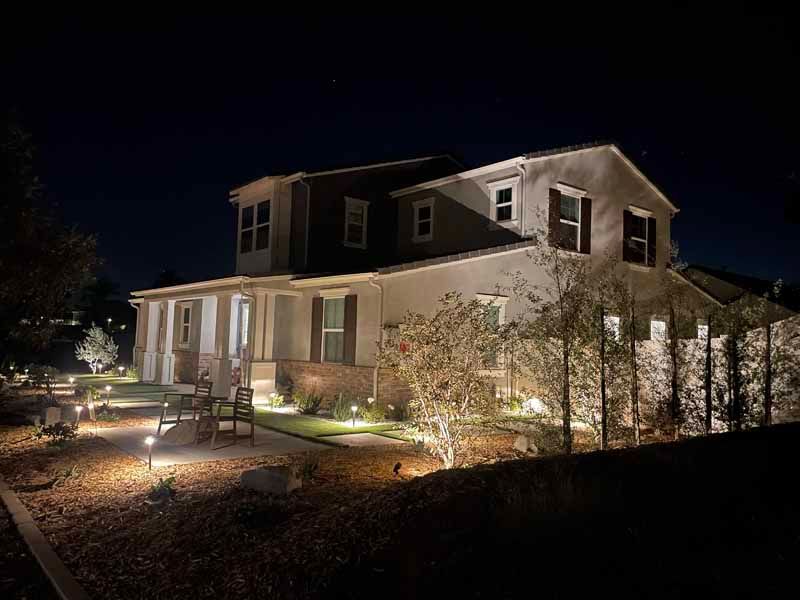
Why Electrical Support Matters for Outdoor Projects
Electrical planning begins with load calculation to determine whether your existing panel has capacity for additional circuits or whether a service upgrade is required before outdoor work proceeds. Dedicated circuits for outdoor kitchens typically include 240-volt lines for built-in grills and 120-volt outlets for refrigerators and smaller appliances, with GFCI protection required for all outdoor receptacles. Landscape lighting uses low-voltage transformers that step down power to 12 volts, reducing shock hazard and allowing flexible fixture placement without heavy conduit requirements. Conduit runs are buried below hardscape before pavers or concrete are placed, coordinating electrical roughin with construction sequencing.
After installation, you'll notice improved visibility and usability across outdoor spaces, with lighting that highlights walkways, seating zones, and architectural elements while reducing dark spots that limit evening use. Outlets positioned near entertainment areas and outdoor kitchens eliminate the need for extension cords, and dedicated circuits prevent power interruptions when multiple appliances operate simultaneously. Lighting controls allow you to adjust intensity and timing, with timer or smart system integration available for automated operation.
Electrical work for ADUs involves separate metering and panel installation when required by local codes, along with service line capacity verification to ensure the main utility connection supports additional load. Trueskil coordinates inspections and permit processes, ensuring all installations meet current electrical codes and pass final inspection without requiring rework. Weatherproof enclosures and proper grounding protect outdoor electrical components from moisture exposure and environmental wear.
What Property Owners Usually Ask
Understanding electrical requirements helps property owners plan outdoor projects without encountering power capacity or code compliance issues.
What determines whether a panel upgrade is necessary before adding outdoor circuits?
Panel capacity depends on the total amperage of existing circuits versus the rated capacity of your service panel, typically 100, 150, or 200 amps. If adding outdoor kitchen circuits, lighting transformers, and other loads would exceed 80 percent of panel capacity, an upgrade is required to maintain safe operation and meet code requirements.
How does landscape lighting installation differ from indoor wiring?
Landscape lighting systems use low-voltage transformers that convert 120-volt household power to 12 volts, allowing smaller gauge wire and simplified fixture connections without requiring conduit burial at the same depth as standard circuits. Fixtures are positioned based on desired lighting effects, with path lights, spotlights, and wash lights controlled from centralized transformers equipped with timers or photocell sensors.
What electrical support do outdoor kitchens require for safe appliance operation?
Built-in grills and other 240-volt appliances need dedicated circuits with appropriate breaker sizing, while 120-volt outlets serve refrigerators, blenders, and small devices, all protected by GFCI receptacles that shut off power when moisture contact is detected. Conduit routing must avoid areas where digging or hardscape maintenance might damage lines.
How does electrical installation coordinate with hardscape construction in La Mesa?
Conduit and junction boxes are installed after base grading but before pavers, concrete, or decorative surfaces are placed, allowing trenches to be dug and filled without disturbing finished work. Coordination between electrical and hardscape contractors ensures that fixture locations align with design plans and that wiring paths avoid conflicts with irrigation or drainage lines.
What weatherproofing and safety measures apply to outdoor electrical systems?
All outdoor receptacles and junction boxes use weatherproof covers rated for wet locations, and GFCI protection is required on circuits serving outdoor areas to prevent shock hazards. Conduit and wiring are buried to code-specified depths, and grounding connections ensure fault current is safely directed away from occupied areas.
Trueskil integrates electrical and lighting systems with outdoor living projects to provide safe, functional power distribution. Arrange a project evaluation to discuss circuit requirements and lighting design for your La Mesa property.