
Patios and Walkways Built for Daily Use
Hardscape & Interlocking Paver Installation in San Diego for properties needing durable outdoor surfaces that handle foot traffic and weather exposure
Trueskil provides hardscape and interlocking paver installation in San Diego for patios, walkways, driveways, and outdoor gathering areas designed to manage both aesthetic goals and structural performance. You need this service when existing surfaces crack, settle unevenly, or lack proper drainage, or when creating new outdoor spaces that support entertaining and daily use. Interlocking pavers flex with ground movement rather than cracking like poured concrete, which matters in areas with expansive soil or seasonal moisture shifts.
The installation process begins with excavation to proper depth, followed by compacted aggregate base preparation that prevents settling and ensures water drains away from structures. Pavers lock together through edge restraint and joint sand, creating a surface that distributes weight across the system rather than concentrating stress in single points. Custom layouts accommodate curves, borders, and decorative patterns using natural stone or manufactured pavers selected for color retention and slip resistance.
Schedule a design consultation to review layout options and material selections based on your site conditions.
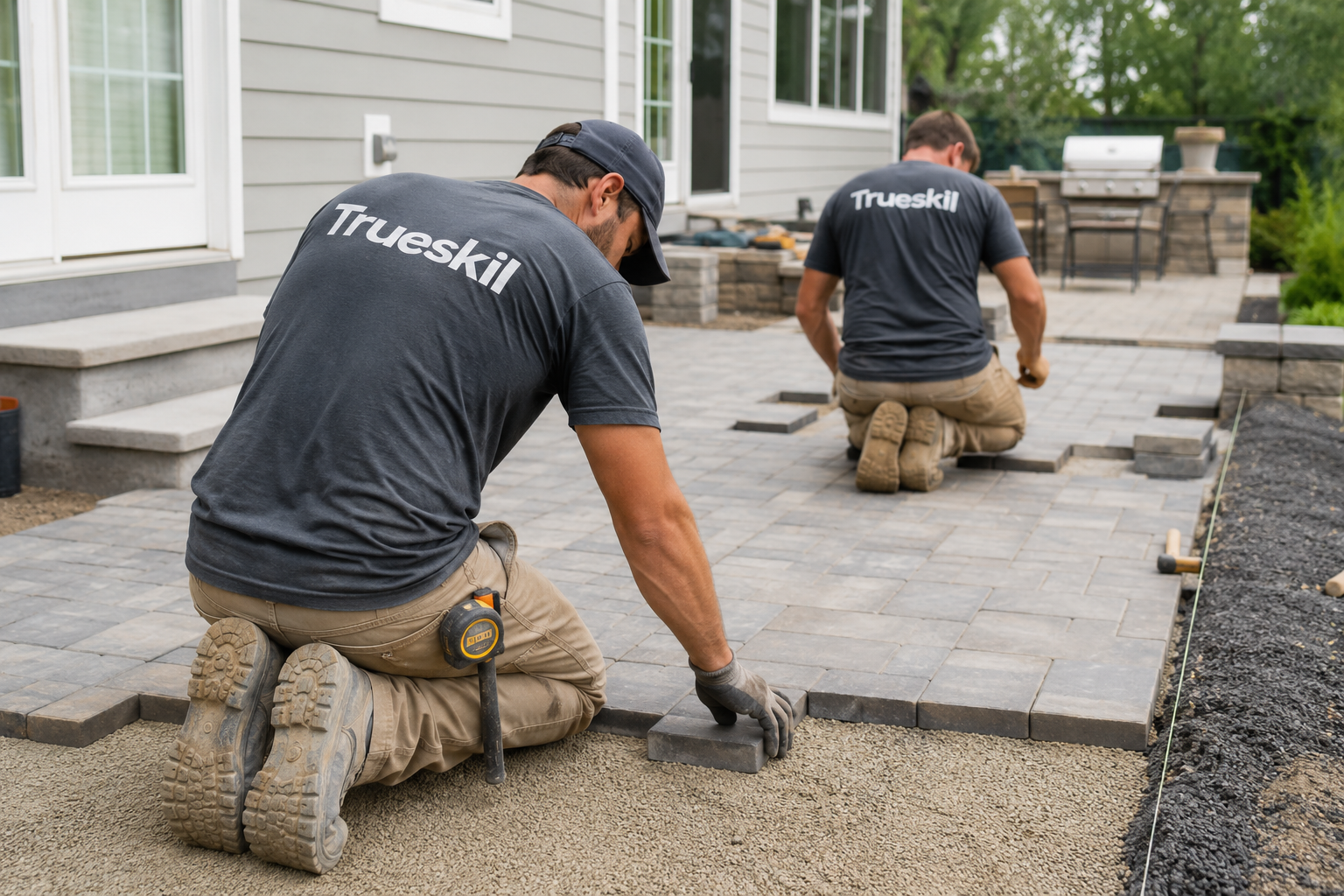
What Proper Base Preparation Accomplishes
Base preparation determines whether pavers remain level over time or develop low spots that collect water and shift underfoot. The aggregate base must be installed in lifts and compacted to at least 95 percent density, with geotextile fabric separating native soil from base material where ground stability is questionable. Drainage considerations include slope direction, edge drains, and permeable joint sand that allows water to infiltrate rather than sheet across the surface.
After installation, you'll notice pavers remain level without the cracking patterns common in concrete slabs, and water drains consistently without pooling in corners or along edges. Trueskil uses edge restraint systems that prevent paver creep on sloped driveways and high-traffic walkways, which maintains joint width and surface appearance. Individual pavers can be lifted and reset if underground utility access is needed, then reinstalled without visible repair patches.
Material selection affects long-term color stability and surface texture—natural stone offers unique variation in each piece, while manufactured pavers provide consistent dimensions and interlocking shapes that simplify complex patterns. Both options resist oil staining better than concrete and can be sealed to reduce efflorescence and enhance color depth, though sealing is optional depending on the product and your maintenance preferences.
Questions Homeowners Ask Before Installation
Hardscape projects vary in complexity based on site conditions, material choices, and design requirements, so understanding the process helps you evaluate scope and timing.
What base depth is required for driveways versus patios?
Driveways require a minimum 8-inch aggregate base to support vehicle weight without rutting, while patios typically use 6 inches depending on soil type and expected load.
How do interlocking pavers handle ground movement?
The sand-filled joints and individual unit design allow pavers to shift slightly with freeze-thaw cycles or soil expansion, then return to position without cracking, unlike rigid concrete slabs that fracture under the same conditions.
What affects the cost of paver installation in San Diego?
Material selection, site access for equipment, the amount of excavation required, and design complexity all influence cost, with natural stone and intricate patterns requiring more labor than standard rectangular manufactured pavers in straight layouts.
When should existing surfaces be replaced with pavers?
Replace surfaces when cracks exceed cosmetic repair, when water pools consistently after rain, or when sections have settled more than an inch below adjacent areas, all of which indicate base failure that will worsen over time.
How are decorative patterns created in paver layouts?
Patterns are achieved through color blending, size variation, and laying sequences such as herringbone or running bond, with border courses and soldier rows defining edges and framing the field area.
Trueskil coordinates site assessment, material sourcing, and installation sequencing to ensure proper drainage integration and structural performance. Request a site evaluation to determine base requirements and review design options suited to your property's grading and soil conditions.