
Surfaces That Perform Without Weekly Maintenance
Artificial Grass & Custom Putting Greens in La Mesa for properties where irrigation costs and lawn upkeep outweigh usability
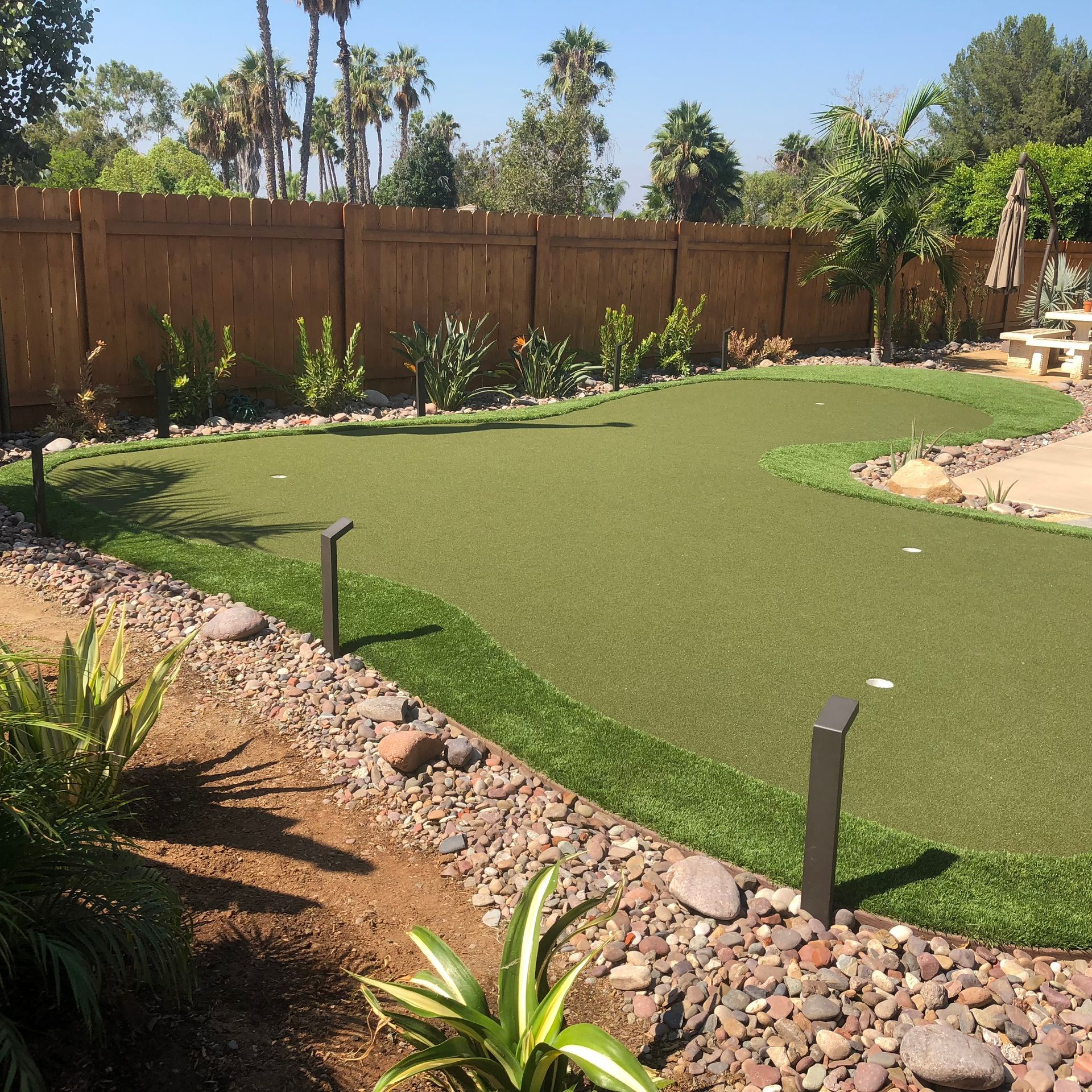
Residential properties with synthetic turf eliminate the recurring water demands and maintenance schedules required by natural grass while maintaining year-round appearance. Trueskil installs low-maintenance turf systems and custom putting greens designed for family use, pet activity, and recreational practice across La Mesa yards. Durable synthetic products withstand foot traffic and UV exposure without fading or developing bare patches common in traditional lawns.
Installation involves removing existing turf or soil to a consistent depth, establishing proper drainage with crushed aggregate base layers, and securing synthetic turf with perimeter fastening and infill material that supports blade structure. Putting greens require additional contouring and precision grading to create realistic ball roll and slope characteristics. Drainage preparation prevents water pooling during rain events and allows pet waste to be rinsed without odor retention.
Request a site evaluation to review turf options and drainage requirements for your property layout.
How Synthetic Turf Addresses Water and Maintenance Concerns
Synthetic turf systems rely on base preparation and drainage design rather than irrigation infrastructure, which means the installation eliminates sprinkler system operation and the associated water consumption. Base layers use crushed rock compacted to prevent settling, with geotextile fabric separating soil from aggregate to maintain long-term stability. Turf fibers are UV-stabilized to resist color degradation under continuous sun exposure, and infill materials—typically silica sand or antimicrobial coated granules—keep blades upright and provide cushioning.
After installation, you'll notice that the lawn remains uniformly green without irrigation schedules, mowing appointments, or fertilizer applications. Pet-friendly turf products include drainage perforations and antimicrobial infill that reduces odor buildup, allowing waste to be hosed off without lingering smell or discoloration. Custom putting greens provide consistent ball response and contouring that mimics real course conditions, offering recreational practice space without ongoing turf management.
Synthetic surfaces integrate with surrounding hardscape and landscape elements by using transition edging that prevents turf edges from lifting and defines borders between planted areas and artificial zones. Trueskil coordinates turf installation with irrigation adjustments so that adjacent plantings still receive water without overspray onto synthetic areas. The systems are designed to last years without replacement, though occasional brushing and debris removal maintain appearance and drainage performance.
Questions Homeowners Have About Turf Systems
Choosing synthetic turf involves understanding how products perform under specific use conditions and what long-term care looks like.
What makes synthetic turf pet-friendly and odor-resistant?
Turf designed for pets includes larger drainage perforations and antimicrobial infill that inhibits bacteria growth, allowing urine to drain through the base layers without causing odor retention. Regular rinsing with water removes solid waste and flushes residue, and the turf itself resists staining or discoloration from pet activity.
How does artificial grass handle La Mesa heat and sun exposure?
Quality turf products use UV-stabilized polyethylene or polypropylene fibers that resist fading and brittleness under continuous sunlight, maintaining color consistency throughout the year. Infill materials reflect some heat, though turf surfaces will feel warmer than natural grass during peak summer afternoons without the cooling effect of evaporation.
What base preparation prevents synthetic turf from settling or developing low spots?
The installation removes several inches of existing material and replaces it with compacted crushed aggregate, typically three to four inches deep, which provides a stable foundation that resists shifting. Proper compaction and grading during base preparation ensure water drains away from the turf surface rather than pooling beneath it.
How does a custom putting green differ from standard synthetic turf installation?
Putting greens use shorter nylon fibers with tighter density and require precision grading to create contours and slopes that affect ball roll, along with cup installations and fringe transitions that replicate actual course features. Base layers are compacted to firmer specifications to support consistent ball response.
What ongoing care does artificial grass require after installation?
Turf maintenance involves periodic brushing to keep fibers upright, debris removal with leaf blowers or rakes, and occasional rinsing to clear dust or pet waste. Infill may need replenishment over time if displaced by heavy use, and seams should be inspected annually to ensure adhesive bonds remain intact.
Trueskil provides synthetic turf and putting green installation that reduces water use and maintenance time across residential properties. Schedule a consultation to discuss product options and site preparation for your La Mesa yard.