
Kitchens Built for Outdoor Cooking and Entertaining
Custom Outdoor Kitchens in San Diego for homeowners who cook and entertain outside frequently enough to justify dedicated appliances and workspace
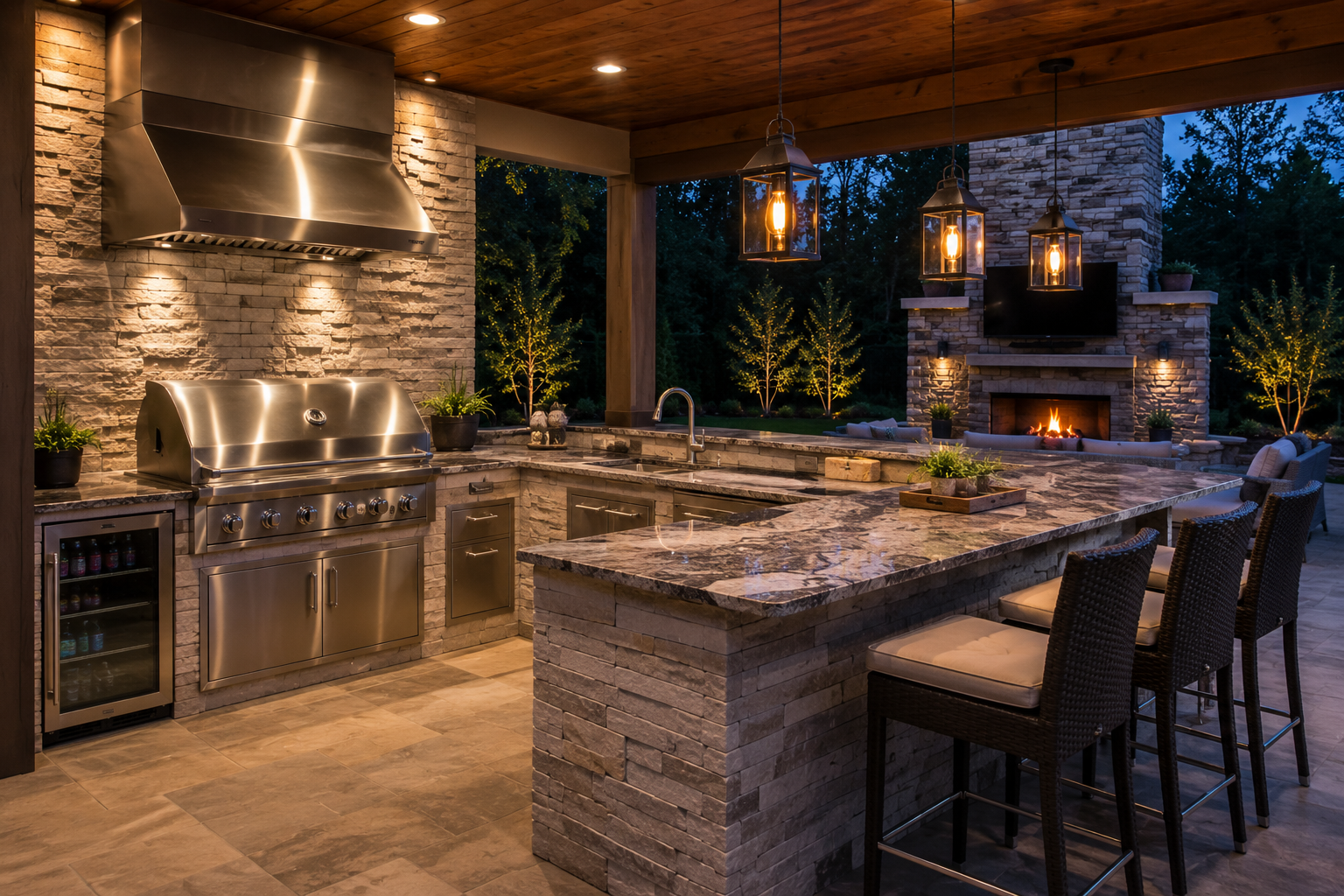
Portable grills and folding tables limit outdoor cooking to basic grilling, but homeowners who regularly host gatherings or prefer cooking outside benefit from permanent outdoor kitchens with built-in equipment and workspace. Trueskil designs and builds custom outdoor kitchens in San Diego that integrate grills, refrigeration, sinks, storage, and seating into durable structures with utility connections planned for safety and code compliance. Layouts support cooking workflows similar to indoor kitchens, with prep zones, cooking surfaces, and serving areas arranged to reduce movement and improve efficiency during meal preparation.
Construction begins with utility rough-ins—gas lines for grills and burners, electrical circuits for refrigeration and lighting, and water supply with drainage for sinks. Masonry or framed structures form the base, with countertops in granite, concrete, or tile selected for heat resistance and weather durability. Appliances rated for outdoor use withstand temperature fluctuations and moisture exposure that would damage indoor models, and stainless steel components resist corrosion in coastal environments.
Arrange a design consultation to discuss cooking preferences and develop a layout suited to your space and budget.
How Utility Integration Affects Design
Outdoor kitchens require gas, electrical, and plumbing connections routed from the home or installed as dedicated services, with code requirements for shutoffs, GFCI protection, and drain venting that prevent safety hazards. Gas lines must be sized for total BTU demand from all appliances, and electrical circuits need sufficient capacity for refrigerators, lighting, and any additional equipment without overloading panels. Sinks require drain lines with proper slope and venting, which adds complexity when the kitchen is far from existing plumbing.
After installation, you'll have dedicated workspace with immediate access to refrigeration, running water, and multiple cooking surfaces, eliminating trips indoors for ingredients and tools. Built-in grills with side burners allow simultaneous cooking of proteins and sides, and undercounter storage keeps utensils and serving dishes within reach. Seating areas integrated into the counter design provide space for guests to gather without crowding the cooking zone, and lighting ensures visibility after dark.
Finishes selected for outdoor kitchens must handle direct sun, rain, and temperature swings—sealed stone countertops resist staining and heat, while marine-grade polymer cabinetry avoids the rot and warping that affect wood in wet conditions. Trueskil sources appliances and materials designed specifically for outdoor use, avoiding the premature failure common when indoor-rated products are installed in exposed locations.
What Homeowners Ask During Kitchen Planning
Outdoor kitchen projects involve appliance selection, utility planning, and material choices that affect both function and longevity.
What appliances are essential in an outdoor kitchen?
At minimum, most functional setups include a built-in grill, refrigeration for beverages and ingredients, and a sink for prep and cleanup, with optional additions like side burners, warming drawers, and ice makers depending on cooking style.
How are outdoor kitchens protected from weather in San Diego?
While San Diego's dry climate reduces weather concerns, covering the cooking area with a patio cover or pavilion protects appliances from UV degradation and occasional rain, extending equipment life and improving comfort during use.
What countertop materials work best outdoors?
Granite, concrete, and porcelain tile resist heat, moisture, and staining better than laminate or untreated wood, with sealed surfaces preventing absorption of grease and food oils that cause discoloration over time.
How much space is needed for a functional outdoor kitchen?
A basic kitchen with grill, refrigerator, and sink requires at least eight linear feet of counter space, with larger layouts adding storage, seating, and multiple cooking zones that expand the footprint to twelve feet or more.
When should appliance selections be finalized?
Appliance dimensions and utility requirements must be confirmed before construction begins, since cutout sizes, gas orifice types, and electrical specifications affect framing, counter layout, and rough-in work that cannot be easily changed later.
Trueskil manages appliance sourcing, utility coordination, and construction sequencing to ensure outdoor kitchens function reliably and meet code requirements. Begin with a design consultation to review your cooking habits, available space, and utility access, then develop a customized plan that fits your entertaining needs and budget.